ON-DEMAND WEBINAR
Mastering Membrane Proteins in days with mimetic screening

Introduction:
Join Cube Biotech and Nuclera to discover a rapid, scalable workflow for expressing and stabilizing complex membrane proteins. Learn how Cube Biotech’s membrane mimetics combined with Nuclera’s eProtein Discovery™ system enable stable, functional, assay-ready membrane proteins in just 48 hours. This webinar highlights case studies on key drug targets, demonstrating how optimized membrane protein production accelerates structural biology, drug screening, and therapeutic development.

Sign up:
membrane protein high resolution cryo-em msba
Webinar Topics:
- Best practices for screening and selecting membrane mimetics to enhance protein stability, function and yield
- Cell-free workflows for membrane protein production from DNA to functional protein in days
- Case studies on challenging proteins showcasing improved expression, purification and downstream usability, accelerating structural biology and drug discovery
Learning objectives:
- Understand the challenges of membrane protein expression and purification, and why conventional methods often fall short.
- Explore how Cube Biotech’s portfolio of membrane stabilizing products enhance protein stability and folding.
- Learn how the eProtein Discovery™ system enables rapid and automated cell-free expression of membrane proteins, producing functional, assay-ready results in just 48 hours.
- Gain insights from real-world case studies from Cube Biotech and Nuclera, illustrating how this integrated approach accelerates structural and functional analysis for high-value protein targets.
Speakers:

Stephanie Reikine PhD

Andreas Kiessling PhD
Mastering membrane proteins in days with mimetic screening
Membrane proteins are notoriously challenging to purify because they are prone to aggregate or misfold once removed from their native lipid environment. Conventional cell-based expression and extraction methods often result in poor solubilization, instability, low yields and inactive protein.
That’s because these approaches are missing what membrane proteins need most: a membrane.
In this webinar, we teamed up with Cube Biotech to show how membrane mimetics paired with our eProtein Discovery System™ can help scientists screen through dozens of membrane scaffold protein (MSP) nanodiscs, lipids, and additives to yield pure, active proteins in just 48 hours.
Beyond detergent-solubilization: MSP nanodiscs
While solubilizing membrane proteins with detergents has been a highly established and cost effective technique, they remove lipids around membrane proteins, making them prone to aggregation, and also remove the bioelectrical context of the protein.
In more recent years, scientists have been using MSP nanodiscs to provide target membrane proteins with a lipid environment. MSP nanodiscs consist of a phospholipid bilayer enclosed by a scaffold protein based on lipoprotein ApoA-I. The MSP shields any exposed hydrophobic edges of the lipid bilayer and keeps the bilayer from dispersing.
A straightforward way to use MSP nanodiscs is to integrate them during cell-free protein expression. This can be done in three ways:
- Expressing the membrane protein in the presence of pre-assembled MSP nanodiscs
- Expressing the membrane protein in the presence of empty nanodiscs and lipids
- Expressing the MSP nanodisc and MSP in the presence of lipids
Want to get active membrane proteins fast?
Optimize nanodisc size and lipid composition simultaneously with automated multiplex screening
Every protein is different so a nanodisc or lipid that works to produce active forms of one protein might not work for another. Purifying membrane proteins using MSP nanodiscs is highly customizable since you can choose nanodiscs with different diameters, define the lipid environment, and add any additional additives to find what’s best for your protein.
- Nanodisc size: Membrane proteins vary in the number of transmembrane regions they contain and in the size and complexity of their native folds. Larger proteins, or those that assemble into multimeric complexes, often require nanodiscs with a larger diameter. However, placing smaller membrane proteins into oversized nanodiscs can lead to multiple proteins incorporating into a single disc, complicating functional assay interpretation and structural analysis.
- Lipid composition: In nature, membrane proteins reside in specific lipid environments, and the composition of these surrounding lipids is critical for proper folding and stabilization. Screening different lipid mixtures can help identify conditions that enhance both yield and functional activity.
- Additives: Some membrane proteins require additional cofactors for activity. Testing different concentrations of the additive (if needed) can help identify one that gives the best activity.
With so many parameters to optimize, it’s easy to imagine that testing dozens of different combinations may be required to find the best conditions. A high-throughput, automated, multiplex protein screening system like the eProtein Discovery System can streamline this process, making it more efficient while providing predictions for yields in off-system scale-up.
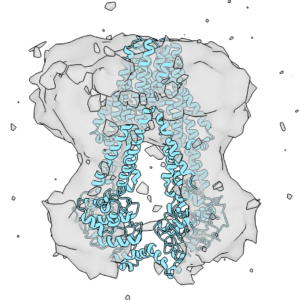
In the webinar, we demonstrated that eProtein Discovery can identify optimal conditions for purifying active membrane proteins suitable for cryoEM and functional assays in just 48 hours. One challenging example we highlighted was MsbA, an ABC transporter with six transmembrane helices. By simultaneously optimizing MSP nanodisc and lipid conditions, we were able to increase the predicted yield of MsbA fivefold. Subsequent studies confirmed that the protein was properly folded, as verified by cryoEM, and functionally active using an ATPase activity assay.
In other cases, Cube Biotech observed that MSP nanodiscs enabled scientists to capture structural intermediates of actinoporins that would have otherwise been missed, and produce GPCR for structural based studies.
About eProtein Discovery
Nuclera's eProtein Discovery™ system combines digital microfluidic droplet automation with cell-free protein synthesis technologies, it empowers protein scientists to identify the best conditions for expressing and purifying proteins of interest within 24 hours, all on a single consumable cartridge.
The system offers a significant advantage over traditional protein expression methods, allowing researchers to save time and resources by simplifying and automating the process. Its ability to handle multiple genes and customizable cell-free blends makes it a valuable tool for protein scientists in academia and the biopharma industry.